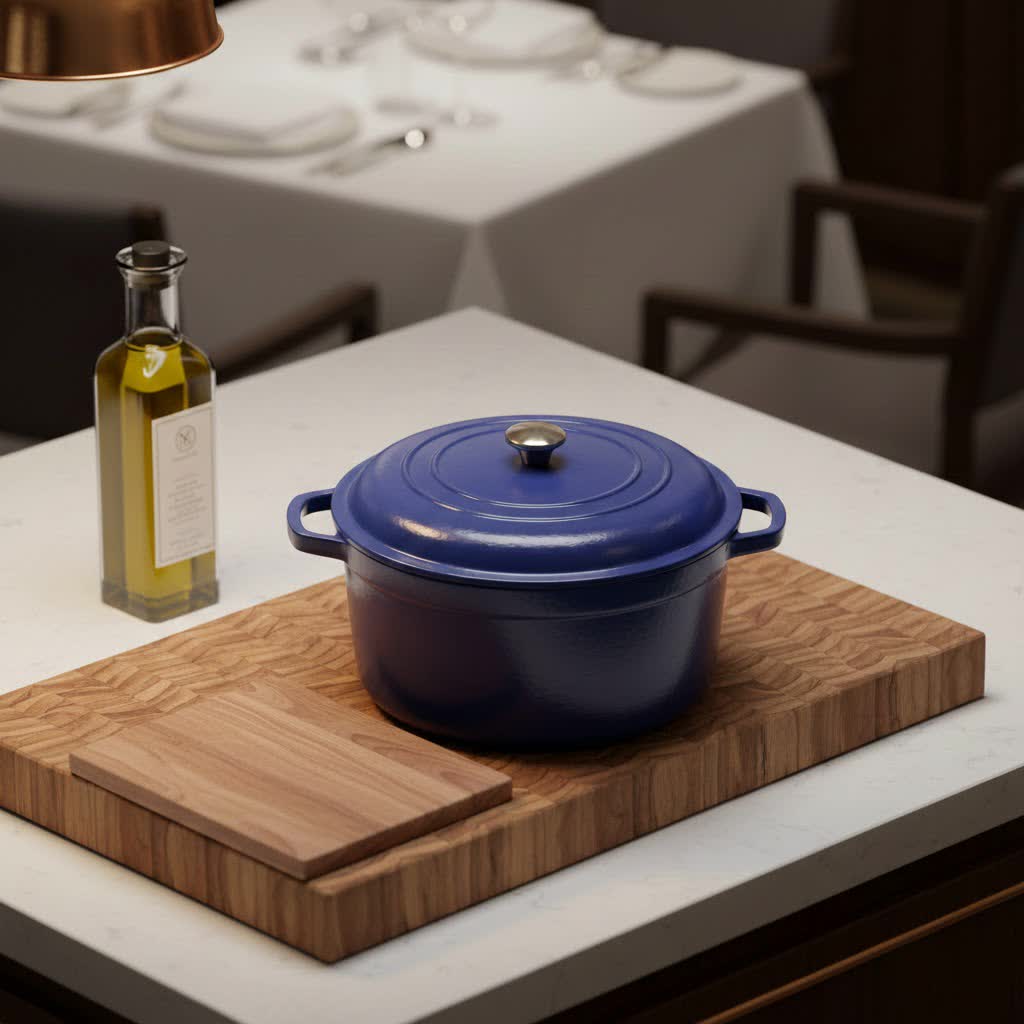
For many home cooks, the term “Dutch oven” instantly conjures images of heavy, rustic cast iron pots, perhaps gleaming with a vibrant enamel finish. While these traditional titans certainly have their place in the kitchen, there’s another contender steadily gaining appreciation: the stainless steel Dutch oven. This versatile piece of cookware offers a compelling alternative, particularly for those seeking durability, lighter weight, and easier maintenance without sacrificing culinary performance.
What is a Dutch Oven, and Why Consider Stainless Steel?
At its core, a Dutch oven is a thick-walled cooking pot with a tight-fitting lid, designed for both stovetop and oven use. Traditionally, these robust vessels are made from cast iron, prized for its exceptional heat retention and even cooking. Enameled cast iron emerged as a popular variation, offering the same thermal benefits with an easier-to-clean, non-reactive surface.
However, stainless steel Dutch ovens present a modern evolution, often overlooked but increasingly favored by seasoned cooks. Unlike its heavier counterparts, a high-quality stainless steel Dutch oven is typically constructed with multiple layers (or “clad” construction) of different metals, such as aluminum or copper sandwiched between stainless steel. This innovative design addresses the inherent limitations of solid stainless steel, transforming it into a highly effective cooking tool. The primary reasons to consider a stainless steel Dutch oven often revolve around its practical benefits in a busy kitchen, offering a blend of performance and convenience that challenges traditional assumptions about what a Dutch oven can be.
Types of Stainless Steel Dutch Ovens
Not all stainless steel Dutch ovens are created equal, and understanding their construction is key. The most effective models feature a clad construction, meaning layers of heat-conductive metals are bonded together:
- Tri-ply: Often consists of two layers of stainless steel with an aluminum core. Aluminum is excellent at heat conduction.
- 5-ply or Multi-ply: Incorporates additional layers, potentially including copper, for even superior heat distribution and responsiveness. Copper is renowned for its rapid and even heating capabilities.
These layered constructions are crucial because solid stainless steel alone is a poor conductor of heat. The aluminum or copper core ensures that heat spreads quickly and evenly across the bottom and sides of the pot, preventing hot spots and promoting consistent cooking. When choosing a stainless steel Dutch oven, prioritize those with robust clad construction for optimal performance.
Stainless Steel Dutch Oven: Advantages and Disadvantages
Like any cookware, stainless steel Dutch ovens come with their own set of pros and cons. Understanding these can help you determine if it’s the right fit for your cooking style.
Advantages:
- Durability: Stainless steel is incredibly resilient and resistant to chipping, cracking, or rusting, unlike enameled cast iron or bare cast iron which require more careful handling and maintenance. This makes them a “buy it for life” investment.
- Easy to Clean and Maintain: Stainless steel doesn’t require seasoning and is generally very easy to clean with soap and water. Many models are dishwasher safe, offering significant convenience.
- Lighter Weight: Compared to cast iron, stainless steel Dutch ovens are noticeably lighter, making them easier to lift, move, and handle, especially when full.
- Excellent Stovetop Searing: High-quality clad stainless steel, particularly with copper or aluminum cores, heats up quickly and can achieve superb searing results on the stovetop. The responsive nature of these metals allows for better temperature control.
- Non-Reactive: Stainless steel does not react with acidic ingredients like tomatoes or wine, preserving the true flavor of your food without any metallic taste.
- Versatility: They perform well across various cooking methods, from braising and stewing to making soups and sauces, and are safe for both stovetop and oven use.
- Sits Better on Glass Stovetops: Unlike some enameled cast iron, stainless steel tends to be less slippery on flat glass or electric hobs.
|
Our Picks for the Best Dutch Oven in 2026
As an Amazon Associate I earn from qualifying purchases.
|
||
| Num | Product | Action |
|---|---|---|
| 1 | Lodge 6 Quart Enameled Cast Iron Dutch Oven with Lid – Dual Handles – Oven Safe up to 500° F or on Stovetop - Use to Marinate, Cook, Bake, Refrigerate and Serve – Cornflower Blue |

|
| 2 | Lodge 6 Quart Enameled Cast Iron Dutch Oven with Lid – Dual Handles – Oven Safe up to 500° F or on Stovetop - Use to Marinate, Cook, Bake, Refrigerate and Serve – Apricot |
|
| 3 | Lodge 6 Quart Enameled Cast Iron Dutch Oven with Lid – Dual Handles – Oven Safe up to 500° F or on Stovetop - Use to Marinate, Cook, Bake, Refrigerate and Serve – Avocado |
|
| 4 | HomeVSS 5.5-Quart Enameled Cast Iron Dutch Oven with Lid & Dual Handles – Heavy-Duty for Bread Baking, Braising, Stews, Roasting, Oven & Induction Compatible, Red |
|
| 5 | Lodge 6 Quart Enameled Cast Iron Dutch Oven with Lid – Dual Handles – Oven Safe up to 500° F or on Stovetop - Use to Marinate, Cook, Bake, Refrigerate and Serve – Cranberry |
|
| 6 | HomeVSS 5.5-Quart Enameled Cast Iron Dutch Oven with Lid & Dual Handles – Heavy-Duty for Bread Baking, Braising, Stews, Roasting, Oven & Induction Compatible, Orange |
|
| 7 | Lodge 6 Quart Enameled Cast Iron Dutch Oven with Lid – Dual Handles – Oven Safe up to 500° F or on Stovetop - Use to Marinate, Cook, Bake, Refrigerate and Serve – Burnt Sienna |
|
| 8 | HomeVSS 5.5-Quart Enameled Cast Iron Dutch Oven with Lid & Dual Handles – Heavy-Duty for Bread Baking, Braising, Stews, Roasting, Oven & Induction Compatible, Blue |
|
| 9 | Lodge 6 Quart Enameled Cast Iron Dutch Oven with Lid – Dual Handles, Oven Safe up to 500°F, Stovetop Compatible – Marinate, Cook, Bake, Refrigerate & Serve – Oyster White |
|
| 10 | Lodge 6 Quart Enameled Cast Iron Dutch Oven with Lid – Dual Handles – Oven Safe up to 500° F or on Stovetop - Use to Marinate, Cook, Bake, Refrigerate and Serve – Blue |
|
Disadvantages:
- Heat Retention: Generally, stainless steel Dutch ovens do not retain heat as effectively as cast iron. While this difference can be negligible in an oven where ambient temperatures are consistent, it might be more noticeable for long, low-heat simmers on the stovetop.
- Lid Fit: Some stainless steel Dutch ovens might lack the extremely heavy, tight-fitting lids found on premium cast iron models, which are essential for trapping moisture during slow cooking.
- Food Sticking: Without a non-stick coating, food can stick to stainless steel if not properly greased or if cooking temperatures are too high, requiring careful technique.
- Heat Distribution (if not clad): A solid, thin stainless steel pot will have poor heat distribution, leading to hot spots and uneven cooking. This is why clad construction is paramount.
Stainless Steel vs. Other Dutch Oven Materials: A Detailed Comparison
When choosing a Dutch oven, the material is often the most critical decision. Here’s how stainless steel stacks up against its common rivals: cast iron and enameled cast iron.
| Feature | Cast Iron (Bare) | Enameled Cast Iron | Stainless Steel (Clad) | Aluminum (Non-clad) |
|---|---|---|---|---|
| Heat Retention | Excellent | Excellent | Good | Average |
| Heat Distribution | Good (slow to heat evenly) | Good (slow to heat evenly) | Excellent (with clad core) | Good |
| Durability | Very High (can last generations if maintained) | High (enamel can chip/crack) | Very High (resistant to damage) | Medium (can dent/warp) |
| Maintenance | High (seasoning, no soap) | Low (easy to clean, soap safe) | Low (easy to clean, often dishwasher safe) | Low (easy to clean) |
| Weight | Very Heavy | Very Heavy | Lighter | Light |
| Reactivity | Reactive (acidic foods) | Non-reactive | Non-reactive | Non-reactive |
| Price | Low to Medium | High | Medium to High | Low |
| Best Use Cases | Searing, frying, baking, campfires | Braising, stewing, baking, acidic dishes | Searing, braising, stewing, acidic dishes, quick heating | Everyday boiling, soups, lighter tasks |
Insights on Performance:
While cast iron excels in long, slow cooking due to its thermal mass, high-quality clad stainless steel can actually offer superior heat distribution on the bottom for tasks like searing. For liquid-heavy dishes cooked in the oven, the thermal mass difference becomes less significant as the oven’s ambient temperature takes over.
Choosing Your Stainless Steel Dutch Oven: Key Factors
Selecting the right stainless steel Dutch oven involves considering several elements to ensure it meets your culinary needs:
- Construction Quality: As discussed, prioritize clad construction (e.g., tri-ply, 5-ply) with an aluminum or copper core. This is paramount for even heat distribution and overall performance. Avoid thin, single-ply stainless steel for Dutch oven applications.
- Size and Capacity: Consider your typical cooking needs.
- 3-4 quart: Ideal for 1-2 people, side dishes, or smaller batches.
- 5-7 quart: The most popular size, suitable for families of 2-4, stews, roasts, and baking bread.
- 7+ quart: Best for larger families, entertaining, or bulk cooking.
- Lid Fit: A tight-fitting lid is crucial for any Dutch oven to trap moisture and heat, creating a self-basting environment for tender results. Look for lids that form a snug seal.
- Handles: Ensure the handles are sturdy, comfortable to grip even with oven mitts, and securely riveted or welded. They should be oven-safe to the temperatures you typically cook at.
- Brand Reputation: While stainless steel Dutch ovens may not be as ubiquitous as their cast iron counterparts, reputable cookware brands like All-Clad, Demeyere, Zwilling, and WMF are known for producing high-quality clad stainless steel products that perform exceptionally well.
Top Stainless Steel Dutch Ovens (Examples)
While specific models constantly evolve, several brands are recognized for their excellence in stainless steel cookware, which extends to their Dutch oven offerings.
- Demeyere Atlantis: Often lauded by experts for its exceptional build quality and impressive heat distribution, particularly the models featuring thick copper bases. It’s known for strong searing capabilities and durability.
- All-Clad: A leader in fully-clad stainless steel cookware, All-Clad offers durable and high-performing options that are praised for even heating and responsiveness.
- Zwilling and WMF: These European brands also produce high-quality stainless steel cookware, including Dutch ovens, known for their robust construction and elegant design.
When exploring these brands, focus on their multi-ply, heavy-gauge stainless steel collections designed for superior heat management.
Care and Maintenance for Your Stainless Steel Dutch Oven
One of the greatest appeals of stainless steel is its low maintenance. Here’s how to keep yours in top condition:
- Cleaning: Wash with warm, soapy water and a sponge or soft brush. For stubborn food residue, soak the pot in hot, soapy water for 15-20 minutes, then scrub. For scorched areas, a paste of baking soda and water can be effective.
- Dishwasher Safety: Many stainless steel Dutch ovens are dishwasher safe. Always check the manufacturer’s instructions.
- Preventing Sticking: Preheat your pot properly and use enough oil or fat. The “mercury ball” test (dropping a small amount of water into a preheated pan—if it forms a single ball and dances, it’s hot enough) can help ensure your pan is ready for cooking.
- Storage: Store in a dry place. While stainless steel is rust-resistant, prolonged exposure to moisture isn’t ideal for any cookware.
Cooking with a Stainless Steel Dutch Oven: Tips and Recipes
Your stainless steel Dutch oven is a versatile workhorse, capable of handling a wide array of dishes.
- Mastering Searing: Preheat the Dutch oven over medium-high heat until a drop of water sizzles and evaporates quickly. Add a high-smoke-point oil, let it heat until shimmering, then add your meat. Avoid overcrowding to ensure a proper sear and fond development, which is excellent for building flavor.
- Braising and Stewing: While cast iron is traditional, a quality clad stainless steel Dutch oven performs beautifully for braises and stews. Sear your ingredients on the stovetop, deglaze with liquid, add remaining ingredients, and transfer to a preheated oven for slow, even cooking. The non-reactive nature of stainless steel is particularly beneficial for tomato-based stews or dishes with wine.
- Baking Bread: Many home bakers achieve fantastic results with stainless steel Dutch ovens for no-knead bread recipes. Preheat the empty pot in a hot oven, then carefully transfer your dough into it for a perfectly crisp crust and tender interior.
- Acidic Dishes: Feel free to cook acidic foods like chili, marinara sauce, or lemon chicken without worry. Stainless steel won’t leach flavors or react with the ingredients, ensuring pure, unadulterated taste.
Where to Buy a Stainless Steel Dutch Oven
You can find high-quality stainless steel Dutch ovens at various retailers:
- Specialty Cookware Stores: These stores often carry premium brands and offer knowledgeable staff to help with your selection.
- Department Stores: Larger department stores with extensive kitchenware sections are good places to look.
- Online Retailers: Websites like Amazon, Williams Sonoma, Sur La Table, or directly from brand websites (All-Clad, Demeyere, Zwilling, WMF) offer a vast selection and customer reviews. Always verify the seller’s reputation when purchasing online.
Conclusion
The stainless steel Dutch oven, particularly those with advanced clad construction, is a formidable piece of kitchen equipment that deserves a place alongside its cast iron cousins. Its unparalleled durability, ease of cleaning, lighter weight, and excellent stovetop performance make it an incredibly practical and reliable choice for a wide range of cooking tasks. While traditionalists might cling to cast iron’s heat retention, the modern stainless steel Dutch oven often offers superior control and versatility for the contemporary home cook. If you value low maintenance and robust performance in a less cumbersome package, a high-quality stainless steel Dutch oven could be the perfect addition to your culinary arsenal.
Are you ready to experience the modern versatility of a stainless steel Dutch oven in your kitchen?
Frequently Asked Questions
Are stainless steel Dutch ovens good for slow cooking?
Yes, high-quality clad stainless steel Dutch ovens are suitable for slow cooking, especially in the oven where the ambient temperature helps maintain heat. While they may not retain heat quite as long as cast iron off the burner, their even heat distribution with a core of aluminum or copper ensures consistent results for stews, braises, and roasts.
Can I bake bread in a stainless steel Dutch oven?
Absolutely! Many bakers successfully use stainless steel Dutch ovens for baking bread, especially popular no-knead recipes. Preheat the empty pot and lid in the oven before carefully adding your dough to achieve a beautiful, crispy crust and soft interior.
How do stainless steel Dutch ovens compare in weight to cast iron?
Stainless steel Dutch ovens are significantly lighter than their cast iron or enameled cast iron counterparts. This makes them much easier to handle, lift, and maneuver, particularly when full of food, reducing strain and improving safety in the kitchen.
Is a stainless steel Dutch oven dishwasher safe?
Most high-quality stainless steel Dutch ovens are dishwasher safe, offering a significant advantage in terms of cleaning convenience. However, it’s always best to consult the manufacturer’s specific care instructions to ensure longevity and prevent any potential damage.
What’s the main difference between clad stainless steel and solid stainless steel cookware?
Clad stainless steel cookware features multiple layers of different metals, typically stainless steel around a core of aluminum or copper, which enhances heat distribution and responsiveness. Solid stainless steel, especially if thin, is a poor heat conductor and can lead to uneven cooking and hot spots.
